
What Is an LED Strip? Types, Uses, Installation & Buying Guide
An LED strip light is a slim, flexible circuit board lined with tiny surface-mounted LEDs that run on low-voltage power to create a continuous line of light. When it’s built and installed correctly, it delivers clean, modern illumination for ceilings, shelving, displays, and architectural details without the bulk of traditional fixtures.
But here’s the part most people don’t realise. Before choosing any LED strip lights, you need clarity on:
12V vs 24V and how voltage affects performance
SMD vs COB, including why density changes the finish
Single colour vs RGB vs RGBW
IP ratings. This is vital since “waterproof” often does not mean what you think
Drivers, controllers, and proper heat management
If you’re considering an LED strip Singapore installation, this guide will walk you through the types, installation principles, realistic costs across the country, and what actually matters when you’re buying.
Let’s get started.
What Is an LED Strip?
An LED strip is basically a thin, flexible board with tiny LED lights attached along its length. It might look simple, but it’s surprisingly versatile. Because it can bend, be cut to size, and fit into corners or tight spaces, it’s perfect for modern ceilings, shelves, display cases, and architectural details.
These strips run on low-voltage DC power, which makes them safe and energy-efficient. Depending on the design, they can provide steady white light or a mix of colours, and some are even built for bright, dynamic effects. The way they look and perform depends entirely on the type you pick and how you install them.
Think of an LED strip as a basic building block for lighting. On its own, it’s simple. In the right setup, though, it can transform a space — making a room feel modern, a display look professional, or an exterior façade stand out. Read more about LED strip light inspiration for every room in the house.
In the sections that follow, we’ll break down the different types, explain what each is best for, and help you choose the right LED strip for your project in Singapore.
Types of LED Strip Lights
Let’s walk through the main types of LED strips and what they mean in everyday use, especially in Singapore.
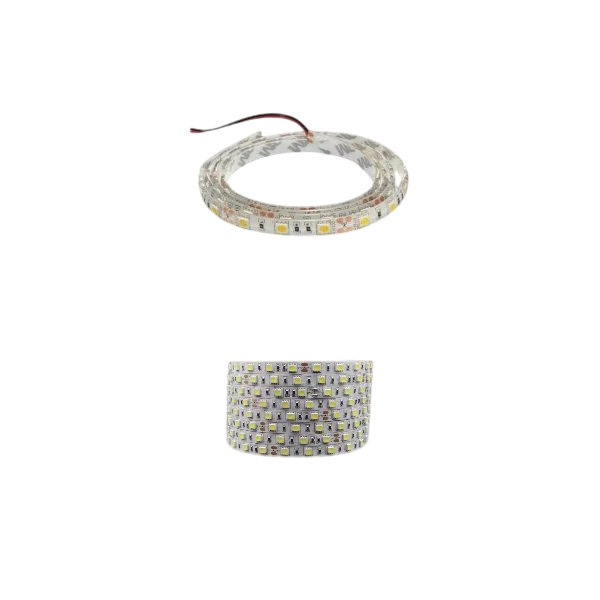
LED Strip Light A11 SMD LED 5050
12V vs 24V LED Strips
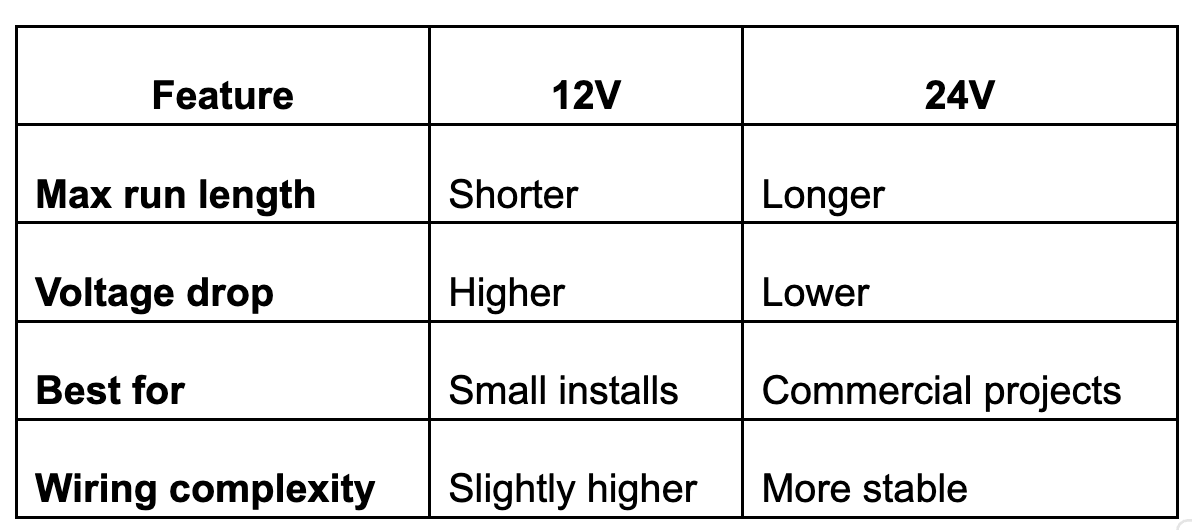
One of the first decisions is whether to go with 12V or 24V strips. It might seem like a small detail, but it matters. 12V strips are great for shorter runs — think bedroom coves, kitchen cabinets, or small accent areas. They’re easy to cut and connect, but if the strip is too long, you’ll notice the ends dimming.
24V strips handle longer runs much better. Voltage drop is lower, and the light stays even across the full length. That’s why you see them in commercial settings, larger apartments, or long led ceiling strip lights in living rooms or retail spaces.
Single Colour vs RGB vs RGBW
LED strips come in different colour options. Single-colour strips give you steady white light — warm, neutral, or cool — and are perfect for subtle accent lighting, like cove lighting or led ceiling strip lights in your home. RGB strips let you change colours dynamically, which works well for events, parties, or eye-catching displays. RGBW strips combine colour-changing RGB with a true white channel, giving you flexibility and high-quality white light — ideal for premium homes or spaces where both function and style matter.
High CRI LED Strips
CRI stands for Colour Rendering Index, and it measures how accurately a light shows true colours. Standard strips with CRI 80 are fine for general lighting, but high CRI strips (90+) make colours pop and look natural. In Singapore, high CRI strips are great for retail shops, restaurants, or any space where the way colours appear really matters.
Waterproof vs Indoor Strips
Not all strips can handle the same conditions. IP20 strips are for dry indoor use — perfect for ceilings or coves. IP65 strips can handle splashes, so they’re suitable for kitchens or bathrooms. IP67 strips are designed for outdoor use, handling rain or damp environments, making them ideal for façade lighting or garden features. Choosing the wrong type is a quick way to ruin your installation — especially in Singapore’s humid climate.
High-Density vs Standard-Density
LED density affects how the light appears. Low-density strips (60 LEDs/m) can show noticeable dots, while higher-density strips (120–240 LEDs/m) create a smooth, continuous glow, especially when used with aluminium channels. In Singapore, high-density strips are popular for led ceiling strip lights where you want the light to look seamless and professional.
COB vs SMD LED Strips
Finally, the type of LED matters. SMD strips are common and affordable, producing bright points of light. COB (which means Chip on Board) strips give continuous, uniform light without visible dots. COB strips cost more, but they’re perfect for premium installations where the smoothest, most refined light is required. SMD strips, on the other hand, are great for general use, while COB shines in high-end residential or commercial spaces.
Installation Guide
A poorly installed strip can flicker, peel off, or fail much sooner than it should. Let’s look at a few critical things you need to know.
What You’ll Need
You can’t just stick the strip on the wall and call it a day. You need a few key components. A power driver converts standard AC electricity to the low-voltage DC that the LEDs require. For RGB or RGBW strips, a controller is necessary to manage colours and effects. Connectors help join strips neatly, and aluminium profiles protect the strip and help manage heat. Skipping any of these can turn even a high-quality led strip Singapore into a headache.
Voltage Drop
The farther electricity travels along the strip, the dimmer the lights at the far end. That’s why 24V strips are regularly used for longer runs: the higher voltage keeps brightness consistent. For very long installations, wiring strips in parallel instead of one continuous run can also help. If you ignore voltage drop, your beautiful led strip lights Singapore could end up uneven or dim at the ends.
Keeping Your Strips Cool
LEDs generate heat, and too much heat shortens their lifespan. Aluminium channels act as heat sinks, drawing heat away from the strip while giving the installation a clean, professional look.
Tips for Mounting
Some simple steps prevent big headaches later. Always clean and dry the surface before sticking down the strip. In addition, avoid sharp bends, which can crack the circuit board, and do not forget to put your driver somewhere accessible but protected from moisture. Finally, test the strip before finalising the installation. These small habits make a huge difference in how professional and reliable your installation looks and performs.
Common Mistakes to Avoid
Even experienced DIYers slip up sometimes. Common mistakes include using an underpowered driver, overloading a single run, ignoring the IP rating, or skipping aluminium channels. Any of these can cause flickering, reduced lifespan, or even damage. A carefully planned led strip Singapore installation avoids these pitfalls.
When It’s Better to Call a Pro
Not every job needs an electrician, but there are cases where it’s worth hiring a pro. Long commercial runs, outdoor façades, smart home integration, or jobs requiring electrical rewiring all benefit from professional help. A trained installer ensures the lights run safely, look seamless, and last as long as they should — exactly what you want from your investment.
Cost Breakdown for LED Strips in Singapore
The price of LED strips in Singapore really depends on what you’re buying. Basic 12V strips usually cost between S$2.00 and S$10.00 per metre, while high-density strips are a bit more at S$6 to S$25 and even more, depending on the retailer. COB strips, which give that smooth, continuous glow, go for $8 to $35 and even more, and RGBW strips typically range from $10 to $60 for 5-metre sets.
Don’t forget the controller. A simple RF controller is inexpensive, but if you want smart features like app control or home automation, a WiFi controller will cost more. Installation adds another factor. Residential jobs are usually straightforward, but long commercial runs, ceilings, or outdoor façades can push labour costs higher. In Singapore, installers usually charge per metre, and complex projects naturally cost more.
Smart LED setups carry a premium, but they let you schedule lights, adjust colours, and integrate with automation systems. Standard strips are cheaper, but you lose those conveniences.
Finally, running costs matter. LEDs use far less electricity than fluorescent or halogen lights, so even if you spend a little more upfront, you’ll save on your monthly bills. In the long run, investing a bit more means longer-lasting, better-looking, and more reliable lighting.
How LED Strips Are Used in Singapore
LED strips are not only for bedrooms or under-cabinet lighting — they’re quietly reshaping how spaces look and feel in Singapore.
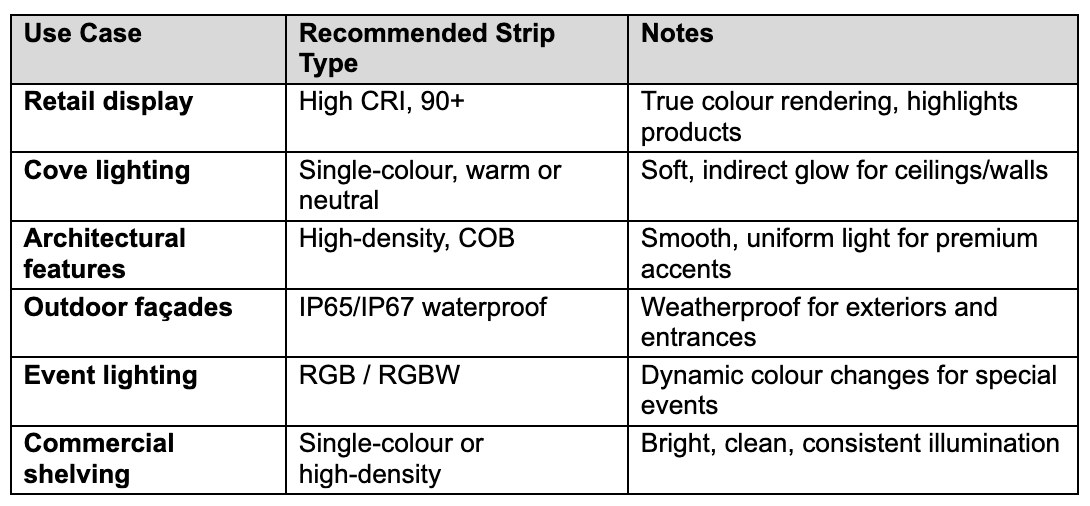
In retail displays, high-CRI strips make products stand out naturally. A well-placed led strip lights can draw attention, highlight details, and instantly give a store or showroom a professional, polished feel.
Cove lighting softens ceilings and walls, creating a warm, inviting glow. It’s perfect for modern condos, offices, and boutique hotels. Architectural feature lighting takes things further — highlighting textured walls, columns, or staircases to turn ordinary spaces into visually striking areas.
For outdoor façades, weatherproof led light strip Singapore options handle humidity and occasional rain, keeping shopfronts, building exteriors, and hotel entrances bright, consistent, and impressive.
Event lighting is another strong use case. RGB or RGBW strips add colour, motion, and drama to weddings, corporate launches, or festivals, creating effects that really stand out.
Finally, commercial shelving lighting improves visibility and makes products easier to see, while giving retail and storage spaces a modern, clean look.
Whether it’s subtle indoor accents or bold outdoor displays, LED strips can transform any space in Singapore — bringing style, efficiency, and professional-quality light all in one.
Here is a quick summary table
Conclusion
LED strips are more than just decorative lighting — they can completely change the look and feel of a space, whether it’s a cosy home corner or a high-traffic commercial display. Picking the right strip, voltage, and density is crucial, and taking the time to plan your installation will pay off in longevity and performance.
Choosing the right LED light supplier in Singapore is essential for achieving reliable and long-lasting lighting solutions. Whether you're upgrading with modern LED lights singapore or exploring flexible LED strip lights options, the right setup can transform any space. For targeted lighting, solutions like LED downlight singapore and LED wall lights help create both functionality and style.
The main takeaway is simple: think ahead. Match your LED strip to the space, consider heat and voltage, and don’t overlook installation details. Do it right, and you get lighting that looks beautiful, works efficiently, and lasts for years.